English

杜潇 「Xiao Du」

CairnovaCairnova

我是重庆大学软件工程专业博士生,导师为 Fengji Luo 博士(悉尼大学)与 文俊浩教授(重庆大学)。研究方向为基于深度强化学习的智能家居能源管理。目前在新加坡南洋理工大学(NTU)联合培养(2026–2027),合作导师 Asst. Prof. Yuguang Fu

此前,我在南京航空航天大学获得能源与动力工程硕士学位,导师为 王继强研究员(中科院)与 张海波教授,研究航空发动机传感器故障诊断与剩余使用寿命预测。本科毕业于重庆大学新能源科学与工程专业。

个人照片

研究方向

我的研究兴趣包括深度强化学习多智能体系统家庭能源管理,尤其关注为异构智能家居能源设备的协同控制设计样本高效、可泛化且安全的强化学习算法。代表性论文以淡绿底色标出。

论文发表

第一作者

Causally Aligned Multi-Agent Reinforcement Learning for Coordinated Control of Heterogeneous Home Energy Devices

Xiao Du, Fengji Luo, Juntao Hu, Wei Zhou, Junhao Wen

IEEE Internet of Things Journal, 2026

Abstract

Deep reinforcement learning (DRL) has emerged as a promising paradigm for home energy management systems (HEMS) due to its model-free nature and ability to handle complex dynamics. However, existing DRL-based approaches typically employ a unified reward function that aggregates multiple objectives into a single scalar, failing to account for the heterogeneous roles of controllable energy devices (CEDs) and their distinct causal relationships with control objectives. This leads to reward misattribution, where CEDs with simpler constraints dominate the optimization process while critical components such as battery storage remain underutilized. To address this challenge, we propose a causally aligned multi-agent reinforcement learning (MARL) framework that explicitly models CED-objective causal pathways using a structural causal model (SCM). A causal surgery procedure decomposes shared objectives into CED-specific variants, enabling individualized reward signals aligned with each CED s causal responsibility. The proposed HR-MASAC algorithm features a multi-head centralized critic for learning vectorized Q-values and agent-specific entropy coefficients for heterogeneous exploration. Experiments across diverse home scenarios demonstrate that our method achieves 40.1% cost reduction and 57.1% comfort improvement over unified-reward baselines, with robust performance under sensor noise and household heterogeneity.

Adaptive Home Energy Management to Self-motivated User Preferences via Iterative LLM-Augmented Reinforcement Learning

Xiao Du, Fengji Luo, Juntao Hu, Wei Zhou, Junhao Wen

Applied Energy, 2026

Abstract

Home energy management systems (HEMS) must balance competing objectives—electricity cost, thermal comfort, and carbon emissions—according to user preferences that are personalized, evolving, and often expressed in natural language. Conventional deep reinforcement learning (DRL) methods cannot directly interpret such preferences, while existing reinforcement learning (RL)+LLM integrations either invoke large language models (LLMs) at every control timestep or rely on one-shot preference parsing without feedback. This paper proposes LA-UPAHEM, an iterative LLM-augmented framework in which three specialized agents collaborate in a closed loop: a Code Generation Agent translates preferences into reward and state modification functions, a Result Analysis Agent diagnoses policy–preference misalignment from evaluation metrics, and an Optimal Performance Search Agent identifies the best-performing policy as the warm-start for the next iteration. LLMs are invoked only during this offline refinement phase; the deployed policy operates independently without LLM inference. Experiments on real residential energy datasets show that LA-UPAHEM outperforms classical DRL and existing RL+LLM baselines in both macro-level key performance indicator (KPI) alignment (cost, comfort, emissions) and micro-level rule compliance, achieving a Weighted Improvement Ratio (WIR) of 0.13 and a Rule Compliance Rate (RCR) of 0.84, while reducing the failure rate from 34.3% (static parsing) to 5.4%. The framework is robust to environmental noise, evaluation weight perturbation, and preference paraphrasing, and generalizes across multiple DRL algorithms, LLM backbones, and preference languages.

Generalizable Zero-Shot Home Energy Management via Representation Learning and Behavioral Cloning

Xiao Du, Fengji Luo, Juntao Hu, Wei Zhou, Junhao Wen

Applied Soft Computing, 2026

Abstract

Deep reinforcement learning (DRL) is widely used in home energy management for its ability to handle nonlinearity and uncertainty. However, its reliance on trial-and-error interaction makes early unsafe and inefficient behaviors impractical in real households. To address this, we propose RB-ZeroHEM, a zero-shot knowledge transfer framework based on representation learning and behavioral cloning. RB-ZeroHEM employs contrastive learning to extract stable, physics-aligned representations of household energy dynamics from historical control trajectories, enabling clustering-based similarity measurement without hand-crafted features. For a new household, it identifies the most similar source cases and clones a deployable policy requiring zero target-environment interactions. Experiments on 12 simulated households driven by real-world energy data demonstrate that when transferring to physically similar environments, RB-ZeroHEM reduces discomfort ratio by 33% and electricity costs by 15% compared to rule-based control, while achieving 81% of the grid energy savings of the best online DRL method with zero interactions.

Contrastive Preference Learning from User Overrides for Personalized Home Energy Management

Xiao Du, Fengji Luo, Jianheng Lan, Wei Zhou, Junhao Wen

IEEE Transactions on Smart Grid, 2026

Abstract

Personalizing home energy management systems (HEMSs) to align with dynamic user preferences remains challenging for intelligent energy control. Existing deep reinforcement learning (DRL) approaches typically rely on static reward functions and fixed constraints, limiting their ability to adapt to diverse user behaviors. We propose a framework that leverages user override feedback—instances where users manually correct system decisions—as implicit preference signals. Our method combines contrastive preference learning from pairwise comparisons, context-aware preference embeddings from interaction history, and preference-conditioned DRL policies. This enables the controller to continuously align with personalized preferences without explicit reward engineering. Validation on real-world residential energy data shows that the framework achieves an average override rate of 0.033 across four diverse preference profiles—a 37% reduction over the strongest baseline—while maintaining the lowest user interaction cost (0.394) among all feedback-driven methods. The framework also demonstrates efficient transfer across prototype preferences and generalization to novel behavioral rules.

Fusion-Based Dual-Task Architecture for Predicting the Remaining Useful Life of an Aeroengine

Xiao Du, Jiajie Chen, Jiqiang Wang, Haibo Zhang, Junhao Wen

Journal of Aerospace Engineering, 2025

Abstract

This paper proposes a fusion-based dual-task architecture that jointly performs degradation pattern recognition and remaining useful life prediction for aeroengines, achieving improved prediction accuracy through multi-source information fusion.

Fault detection of aero-engine sensor based on inception-CNN

Xiao Du, Jiajie Chen, Haibo Zhang, Jiqiang Wang

Aerospace, 2022

Abstract

The aero-engine system is complex, and the working environment is harsh. As the fundamental component of the aero-engine control system, the sensor must monitor its health status. Traditional sensor fault detection algorithms often have many parameters, complex architecture, and low detection accuracy. Aiming at this problem, a convolutional neural network (CNN) whose basic unit is an inception block composed of convolution kernels of different sizes in parallel is proposed. The network fully extracts redundant analytical information between sensors through different size convolution kernels and uses it for aero-engine sensor fault detection. On the sensor failure dataset generated by the Monte Carlo simulation method, the detection accuracy of Inception-CNN is 95.41%, which improves the prediction accuracy by 17.27% and 12.69% compared with the best-performing non-neural network algorithm and simple BP neural networks tested in the paper, respectively. In addition, the method simplifies the traditional fault detection unit composed of multiple fusion algorithms into one detection algorithm, which reduces the complexity of the algorithm. Finally, the effectiveness and feasibility of the method are verified in two aspects of the typical sensor fault detection effect and fault detection and isolation process.

Nonlinear Control Design of Aero-Engine Based on NGMV

Xiao Du, Xiuqi Wang, Jiqiang Wang

Proceedings of 2021 Chinese Intelligent Systems Conference: Volume I, 2021

Abstract

Complex and strong nonlinearity are important characteristics of aero-engines, and they often work in harsh environments. How to design a simple, stable, and small-calculation nonlinear controller applying appropriate nonlinear theory is a great challenge. Aiming at this challenge, a controller design method based on Nonlinear Generalized Minimum Variance (NGMV) be proposed by this paper. The NGMV controller of an aero-engine is designed and implemented, and its excellent control performance is proved by comparison with the traditional PI controller.

合作

Multienergy Management Control Schedule Design Method for Parallel Hybrid Electric Turbofan Engine under Different Flight Conditions

Jiajie Chen, Feifan Yu, Xiao Du, Xinmin Chen, Jiqiang Wang, Xiaokang Sun

Journal of Aerospace Engineering, 2026

Abstract

In the parallel hybrid electric propulsion system (PHEPS), the integrated electric power system serves as an augmenter to the conventional turbomachinery. In order to maximize the performance improvement for the original aeroengine components, this study presents a novel multienergy management control schedule design method for each different flight condition. Through digital simulation and hardware in the loop simulation based on a parallel hybrid geared turbofan engine (PH-GTF) model, results show that compared with the baseline GTF engine, the PH-GTF propulsion system exhibits significant performance improvements: 31% reduction in compressor airflow losses, 5% and 2% surge margin improvements in the low-pressure compressor during accelerated/decelerated transients, and 18.8% fuel savings under the cruise condition.

A Novel Method of Vibration Control for Internal and External Cases of Aero-engines Based on Geometric Design Method.

Ran An, Jiajie Chen, Xiao Du, Haibo Zhang, Jiqiang Wang

Journal of Nanjing University of Aeronautics & Astronautics, 2023

Abstract

Because of the complexity of the structure and the instability of the external air flow, a lot of vibration problems will inevitably occur during the operation of aero-engine. Aiming at the vibration problem of the whole aero-engine, a general dynamic model of rotor-support-casing vibration transmission is established according to the actual structure of the aero-engine and the summary of experience. Moreover, starting from the vibration control problem of the internal and external casing of aero-engine, a new control algorithm (geometric design method) is used in this paper to design the vibration reduction controller in the limited frequency domain. In the case of limited sensors and actuator, the controller will be used to try to control the vibration of multiple outputs (ie, the inner and outer casings of the aero-engine), and compare the vibration reduction effect with the vibration reduction controller designed by the classical control theory method (PID). Finally, the simulation model is built and verified by Matlab/Simulink. The results show that the geometric design method can intuitively obtain the existence, uniqueness and optimality of the optimal controller in the limited frequency domain, and the optimal vibration reduction control for the main control object can be as high as 25dB. Compared with traditional control methods, geometric design method has obvious advantages.

创业

磐星 「Cairnova」 — 创始人,2026 至今

为 AI 时代重新设计个人工具,让智能平等地属于每个人。

随心 「Whimsy」

无需总结,无需整理——帮你打理一切的随心收藏应用(iOS + FastAPI + 大模型)。主导产品与 iOS 开发。

桌伴 「DeskMate」开发中

面向青少年的桌面互动教学具身智能硬件,把大模型背后的广博知识,变成书桌上可学习的一次次交互。

项目

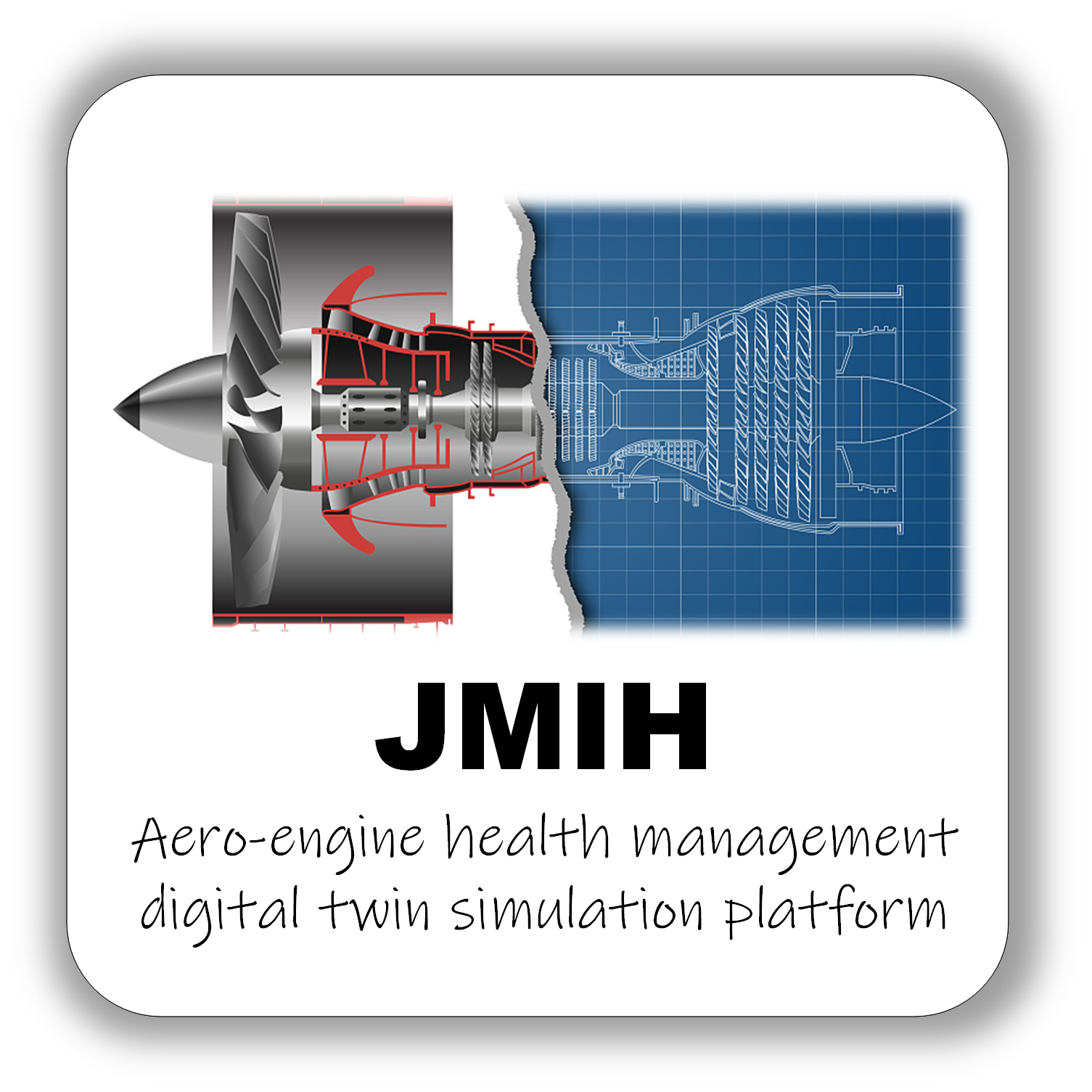
Just Make It Happen (JMIH)

航空发动机健康管理数字孪生仿真平台

JMIH 是面向航空发动机健康管理的可视化数字孪生平台:故障诊断、剩余寿命预测、可视化、发动机模型管理、算法管理等。

教育经历

重庆大学,重庆
软件工程 博士 · 2023.09 – 至今
新加坡南洋理工大学(NTU),新加坡
联合培养博士(访问) · 2026.06 – 2027.06
南京航空航天大学,南京
能源与动力工程 硕士 · 2020.09 – 2023.04
重庆大学,重庆
新能源科学与工程 学士 · 2015.09 – 2019.06

经历

科研实习生 · 2017.03 – 2017.12 · 导师: 夏奡 教授

学术服务

荣誉与资助

荣誉奖项